
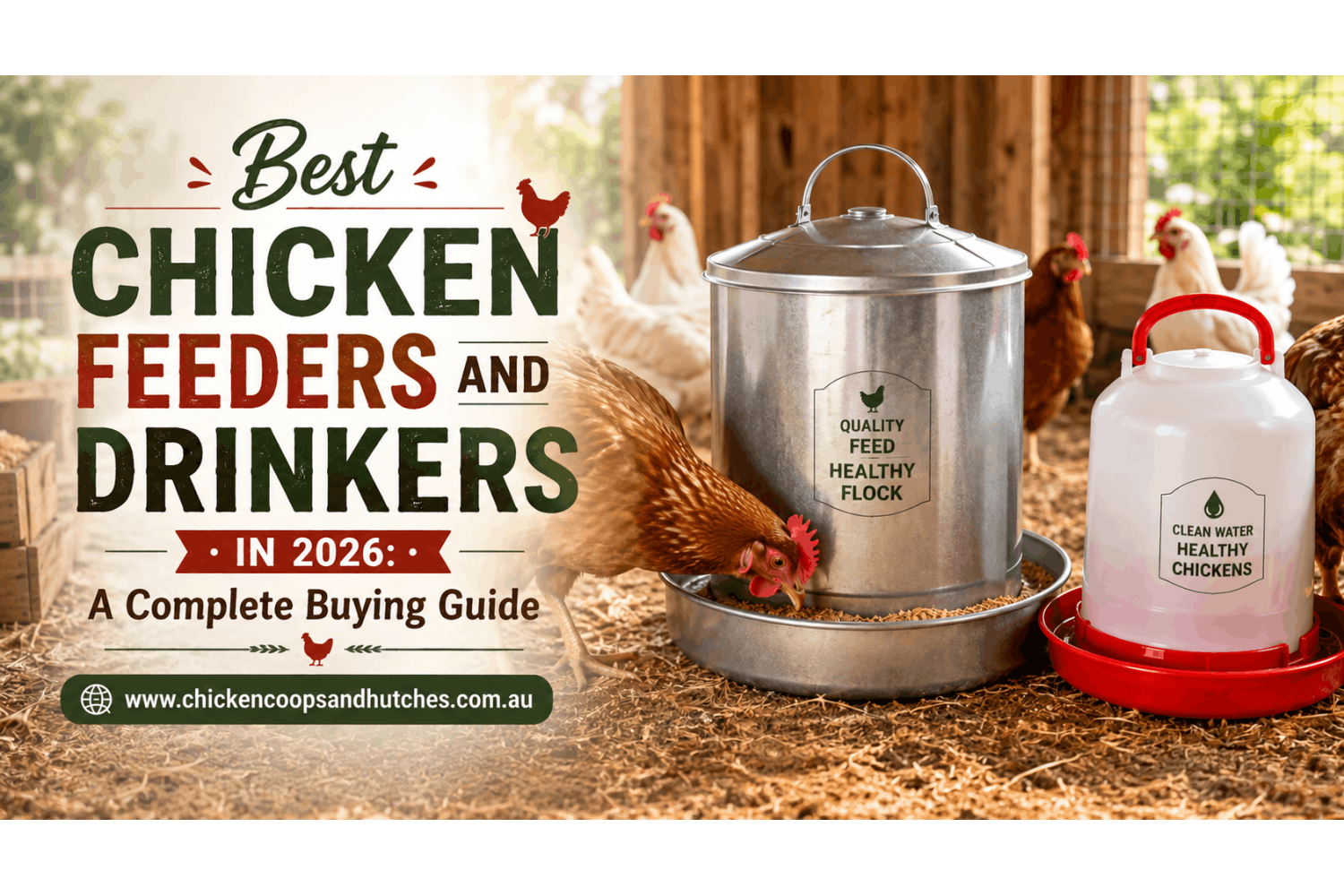

There is a particular kind of mess only chicken keepers are aware of. It is not the coop, and it is not the eggs. But it is the feed gone soggy after overnight rain. Or the water dish that looked fine yesterday and is now full of mud and droppings. Most flock problems come back to one of these two things being done badly.
Now fixing it is not complicated once you know what is out there and why each option works the way it does. This guide runs through the main types of chicken feeders and drinkers available in 2026, and how to match them to your setup, whether th it is a small chook house in your backyard or a fully kitted-out wooden chicken coop.
Why Chicken Feeder and Drinkers Matters More Than People Think?
A poor feeder tends to fail in the same three ways. Feed spills and gets wasted. Rats, mice, and wild birds treat it as an easy meal, usually overnight. And whatever feed is left often picks up droppings before the chickens get to it.
Drinkers fail in a different way, but very easily. An open bowl of water can look clean in the morning and be full of dirt and bacteria by afternoon. Dirty water spreads illness through a flock faster than almost anything else. So it's worth taking seriously rather than treating as a small chore.
Now to fix them is the same in both cases, that is, keep feed and water off the ground, sealed where possible, and protected from the weather.
Which Feeder You Should Opt For?
The Gravity Feeder: A Simple Starting Point
Feed sits in a tube and drops into a tray as birds eat from the bottom. These feeders are affordable, easy to find, and available in plastic or galvanised steel. The main drawback is that they stay open to rats and sparrows overnight, so they work best for daytime feeding rather than being left out continuously.
The Treadle Feeder: Built to Keep Pests Out
A bird has to step on a plate for the lid to lift, so nothing else can get in. This keeps feed dry and reduces waste, and pests are largely kept away. The one thing to note is that younger or lighter birds can take a week or two to learn how it works, which is normal.
The Automatic Feeder: For a More Hands-Off Routine
An automatic feeder runs on a timer and releases a set amount of feed at fixed times. It is a useful option for anyone who isn't always home at feeding time, and it helps keep portions consistent. It does need power or batteries, which is worth factoring in.
The Hanging Feeder: A Small Design That Makes a Difference
Suspended from a beam or stand, this feeder moves slightly as birds eat from it. That small movement reduces spillage more than expected, and keeping feed off the floor also helps limit pest access.
What Drinkers Are Available?
The Gravity Waterer: Straightforward and Easy to Maintain
This works on the same principle as a gravity feeder. A reserve of water tops up a small trough as it is used. It is a simple, reliable option that is easy to clean.
The Nipple Drinker: A Better Standard of Hygiene
Water is sealed inside a bucket or pipe, and birds release a drop by pecking a small valve. Because the water stays enclosed, droppings and dirt can't reach it, which also helps keep the surrounding bedding drier. Chicks typically need a day or two to learn how to use it.
The Cup Drinker: A Middle-Ground Option
A float mechanism refills a small cup as birds drink from it. It is not fully enclosed like a nipple system, but it is a clear improvement over an open dish.
The Heated Drinker: Useful in Cooler Climates
This type prevents water from freezing overnight, which matters mainly in colder regions. Across most of Southeast Queensland, this is not usually a concern, though it can be useful further inland or at higher elevations.
Which Feeder and Drinker Suits Your Flock?
There is not one right combination. It depends on how many birds you keep and how often you're around to check on things.
A small backyard flock of five or six birds usually does fine with a basic gravity feeder and drinker, as long as someone checks it daily. Larger flocks, or busier SEQ chicken coops running more birds through a shared space, tend to hold up better with treadle feeders and nipple drinkers, simply because they need less daily attention.
For a wooden chicken coop, hanging feeders and drinkers are worth considering. Keeping them suspended rather than sitting on the floor helps protect the timber from moisture damage over time, which matters more for longevity than most people realise until it's too late. If there is a covered run attached to the chook house, an elevated, weatherproof feeder also helps keep feed dry through wetter stretches of the year.
One thing worth checking if you are browsing hutches for sale is that feeders and drinkers are not always included as standard. It is easy to assume they come with the setup and find out otherwise once it turns up.
Where Should You Place Chicken Feeders and Drinkers?
- Keep feeders and drinkers off the ground, roughly level with a bird's back, so droppings and bedding don't end up mixed in.
- Keep water out of direct sunlight where you can. It slows algae growth considerably.
- With a bigger flock, spread feeding points apart so lower-ranking birds aren't pushed out.
- Give everything a proper wash weekly, more often once the weather turns hot and humid.
Wrapping Up
Treadle feeders and nipple drinkers handle pest control and hygiene better than most alternatives, which makes them worth considering for anyone running a proper backyard or semi-rural flock. Simple gravity setups still do the job well for smaller numbers, as long as they are checked regularly. In the end, the equipment matters less than the habit built around it, keeping things clean, dry, and in the right spot.
If you are setting up a new coop, or rethinking an older chook house, it's worth sorting out feeder and drinker placement early rather than adding it in as an afterthought. Whether you are browsing accessories on Chicken Coops and Hutches or elsewhere, checking what is included with your setup beforehand will save a bit of guesswork later. Contact us if you need help choosing the right feeders, drinkers, or other chicken coop accessories for your flock.
FAQ’s
How many feeders and drinkers does a flock actually need?
A reasonable guide is one feeding space per four or five birds, and one drinker per eight to ten. Extra access points rarely hurt, they just mean less competition and less stress at feeding time.
Is it safe to leave feeders outside overnight?
Open feeders left out overnight tend to attract rats and wild birds fairly quickly. A treadle feeder handles this far better, or simply bring feeders inside a secure chook house before dark.
Do chicks know how to use nipple drinkers right away?
Not usually. Most take a day or two to work it out. Starting them on a shallow dish and switching over once they're confident tends to make the transition smoother.
How often should drinking water actually be changed?
Daily is the safer habit, even with fully enclosed systems. Algae can still build up over time, just at a much slower rate than in an open dish.