
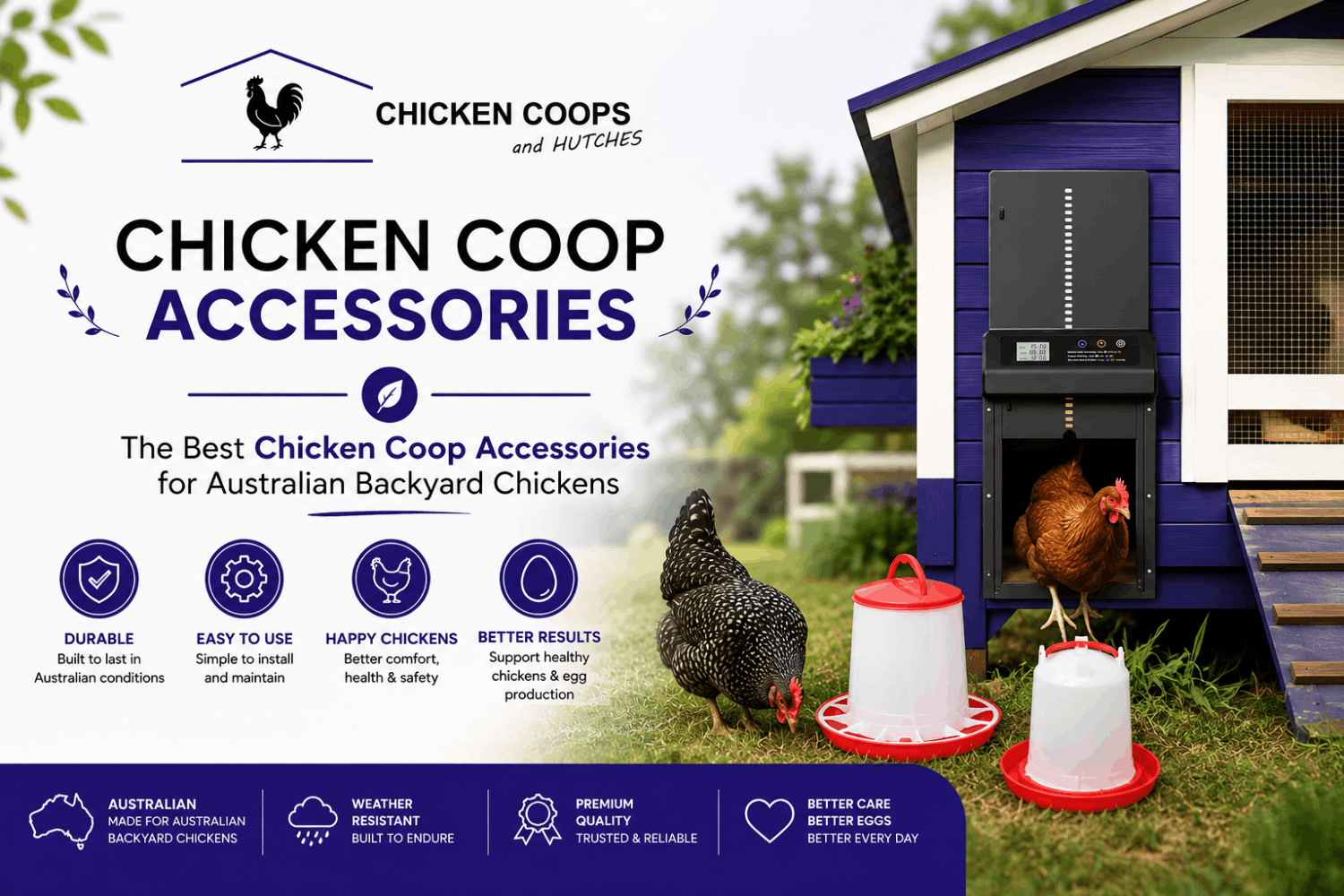

Backyard chicken keeping has grown steadily across Australia, and for good reason. Fresh eggs, natural pest control, and the satisfaction of raising your own flock make it one of the most rewarding things you can do with an outdoor space. But a coop alone is not enough. The accessories you choose directly shape how healthy your birds stay, how consistently they lay, and how much daily effort the setup demands.
Getting the right chicken coop accessories in place from the start saves time, reduces health problems, and makes the whole experience more manageable. Here is what every Australian backyard keeper should know.
Feeders: Protecting Feed From Waste and Pests
Australia's backyard coops face a challenge many guides overlook: native wildlife and rodents that treat an open feeder as a free meal. Poorly designed feeders attract rats, mice, and native birds, all of which contaminate feed and spread disease to your flock.
The most effective solution widely used across Australia is the treadle feeder. The lid only opens when a chicken steps onto the platform. When they step off, it closes. Pests cannot trigger it, so feed stays clean and dry between meals.
- Weatherproof construction, galvanised steel or UV-stabilised plastic
- Capacity appropriate to your flock, one feeder per 6–8 birds
- Easy access for cleaning and refilling
Drinkers: Maintaining Clean Water Through Every Season
Hydration is directly tied to egg production. A laying hen consumes around 500ml of water daily, more in summer. Any disruption, even a few hours on a hot day, can stall laying for several days after.
Nipple drinkers have become the standard choice for Australian backyard keepers. Hens peck a small valve to release water, so the supply is never exposed to droppings, dirt, or algae. This lowers the bacterial load in drinking water and keeps the coop floor drier.
- Position drinkers in shaded areas to keep water cooler through the day
- During heatwaves, provide at least one drinker per six hens
- Clean the system weekly to prevent biofilm, which can harbour harmful bacteria even when water looks clear
Nesting Boxes: Where Egg Quality Begins
The condition of nesting boxes directly affects egg cleanliness, laying consistency, and whether hens develop the habit of eating their own eggs. A hen that feels exposed or crowded will often lay elsewhere, on the coop floor or in a hidden corner of the run.
The standard guideline is one nesting box per three to four hens, with internal dimensions of at least 30cm × 30cm. Hens strongly prefer boxes that offer:
- Low light and a sense of enclosure - avoid positions that catch direct morning sun
- A front lip to hold nesting material in place
- Dry, clean bedding replaced regularly - straw, pine shavings, or hemp all work well
Roost Bars: Meeting the Instinct to Perch
Chickens do not sleep on flat surfaces by nature. In the wild, they roost elevated off the ground. In a coop, a proper roost bar meets that instinct, keeping hens off the floor, reducing contact with droppings, and supporting better sleep and immune function.
- A rounded or oval cross-section, square-edged timber creates pressure on the keel bone over time
- At least 30–40cm of perch length per bird to prevent crowding and nighttime aggression
- A position higher than the nesting boxes, hens seek the highest point available, and you do not want them roosting in the boxes
Diatomaceous Earth: Practical Parasite Control for Australian Conditions
Red mites, lice, and feather mites thrive in warm conditions, which makes Australian coops particularly vulnerable through spring and summer. These parasites feed on hens at night, causing feather loss, anaemia, and a measurable fall in egg production.
Food-grade diatomaceous earth (DE) is a fine natural powder processed from fossilised algae. It works mechanically, piercing the outer coating of parasites and causing them to dehydrate. It leaves no chemical residue and requires no egg withdrawal period.
- Dust the coop floor, nesting box bedding, and roost bar surfaces after each clean
- Work the powder into timber cracks and crevices where mites shelter during daylight hours
- Add a small amount to the dust bathing area, hens will self-apply it through natural behaviour
Automatic Coop Door Openers: Reliable Protection at Dusk and Dawn
Fox predation peaks at dusk and in the early morning hours. The most common cause of flock loss in Australian backyards is not a structural failure in the coop. It is a door left open overnight, or opened too early before threats had passed.
An automatic door opener eliminates that vulnerability. Most units are battery-powered, run on a light sensor or programmable timer, and can be retrofitted to an existing coop door. They open after sunrise and close reliably at dusk, without requiring the keeper to be present.
For households near bushland, semi-rural areas, or any suburb with a known fox presence, this is one of the most practical additions to any backyard setup.
Build a Setup That Works for Your Flock
Visit to explore the range.
Related Product

Automatic Chicken Door
Automatic Chicken Door:Please note single orders we send via australia post satchels costing $18.Thi..
$60.00